Low Dose Naltrexone: What the Evidence Shows, and Where It Fits
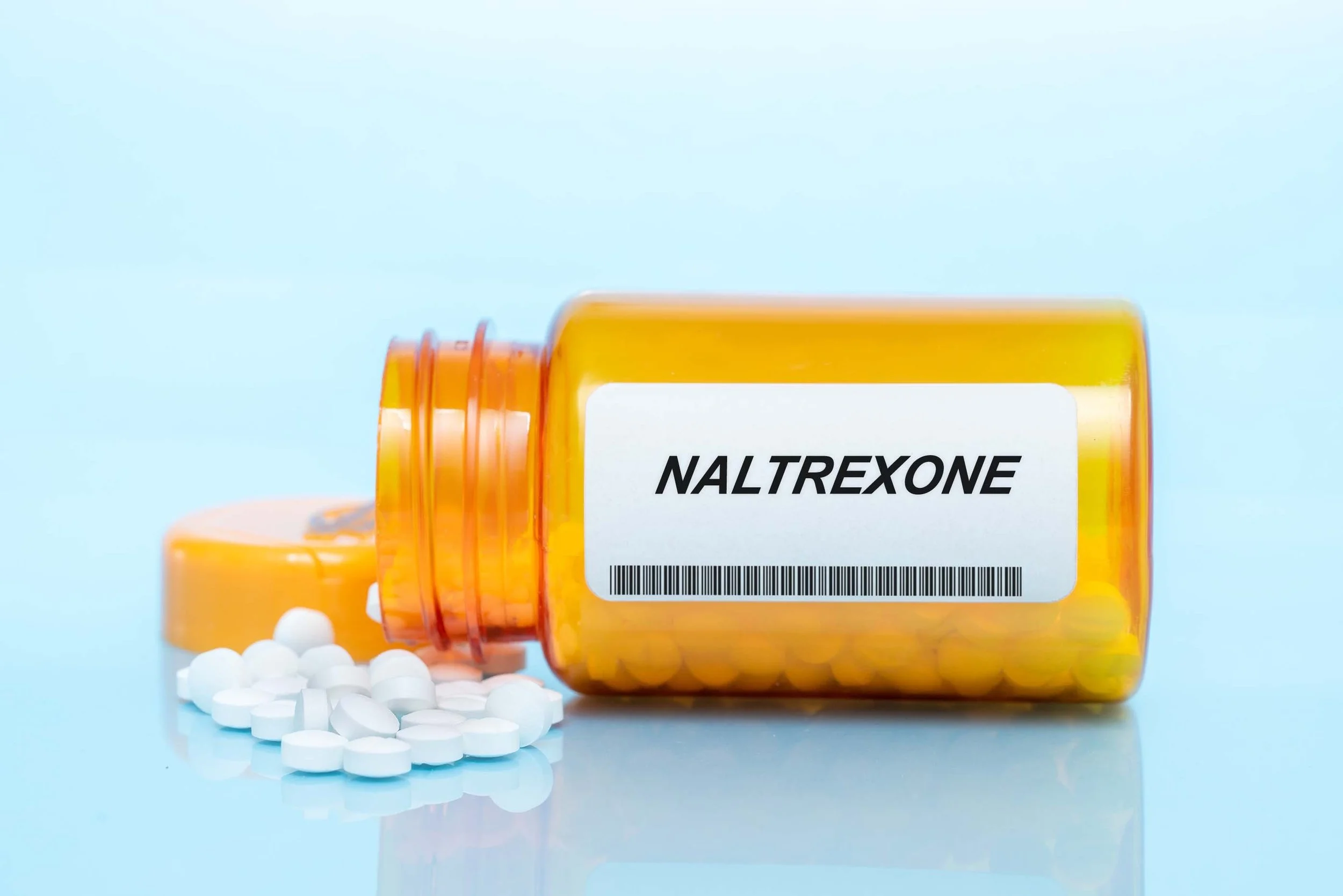
A cheap, low risk medication my patients ask about a lot. Here's what I've seen in clinic, and what the research supports.
One drug, two very different jobs
Naltrexone has been around for decades. At its FDA-approved dose, 50 mg, it blocks opioid receptors and helps people with opioid or alcohol use disorder stay off the substance. That's its official job.
At a much lower dose, typically 1.5 to 5 mg, it seems to do something else entirely. Patients with fibromyalgia, autoimmune disease, and chronic pain have used it off label for years. I'll call it LDN from here, short for low dose naltrexone.
How it's thought to work
Two theories get the most attention.
One is that at this dose, naltrexone blocks Toll-like receptor 4 (TLR4), found on immune cells and on certain cells in the brain and spinal cord called glial cells. TLR4 drives inflammation, so blocking it can turn down that signal, including some of the inflammatory proteins that show up in autoimmune disease.
The other theory is about timing, sometimes called the rebound effect. At this low dose, naltrexone briefly blocks opioid receptors for a few hours, then wears off. The theory is that your body overcorrects: it ramps up its own endorphin production and the number of opioid receptors available to use them, overshooting your normal baseline once the drug clears. Endorphins do more than manage pain. They also seem to influence immune cell activity, which may be part of why this rebound helps with inflammation too.
What the research shows
Fibromyalgia has the best data of any rheumatic condition, and even that isn't especially strong. Small trials in the early 2010s were promising. The largest, most rigorous trial to date, from 2024, didn't beat placebo on its main pain measure, but more patients on LDN got real relief (a 30% or more drop in pain) than on placebo: 45% versus 28%. Researchers pooling that same data since then have landed in different places, including a more skeptical reanalysis in 2026. That's a fair summary of where things stand: a real signal, not a settled question.
That doesn't mean I don't see results in the exam room. Plenty of patients feel a real difference on LDN.
For other rheumatic conditions, the data is thinner still: mostly case reports in Sjogren's, lupus, dermatomyositis, and scleroderma, plus one larger study in rheumatoid arthritis that didn't include a placebo group for comparison. Encouraging. Not proof.
A broader review across every condition LDN gets used for reached a similar verdict: current evidence doesn't support routine use, though it may have a role for patients who've failed standard therapy, as long as its experimental status is made clear. That's close to how I use it.
Where I use it
I use LDN for two groups of patients.
The first is patients with autoimmune disease whose inflammation looks controlled on labs and imaging, but who still have ongoing pain. That's usually centralized pain, meaning the nervous system itself has become sensitized, rather than pain driven by active joint inflammation.
The second is anyone who also has fibromyalgia, which shows up alongside rheumatologic conditions constantly.
I like LDN for a few reasons. In my experience, patients with centralized pain respond fairly well to it. I also like that it tends to be better tolerated than other options, including gabapentin and pregabalin (Lyrica), which can leave patients fatigued or foggy. The side effect profile is low, and it's cheap even paying cash. I've had a good number of patients tolerate it well and feel meaningfully better.
The practical stuff
LDN isn't something you pick up at a regular pharmacy in the dose we use. Naltrexone only comes commercially in 50 mg tablets, so the low doses have to be made by a compounding pharmacy, at the specific dose you need.
I typically start patients around 1 mg and increase by 1 mg every 1 to 2 weeks, as tolerated, up to a max of 5 mg. It takes some patience. The effect isn't immediate, so give it time before deciding whether it's working.
Side effects are usually mild. The most common are nausea, lightheadedness, headache, and vivid dreams, especially early on. Most patients tolerate it well. Starting low and going up gradually seems to matter here. When I titrate this slowly, I rarely hear about side effects at all.
There's one situation where I won't prescribe LDN: if you're taking an opioid regularly. Starting LDN while you're still on an opioid can trigger withdrawal, since LDN blocks the same receptors those medications need to work. You'd need to taper off the opioid first, then we can talk about LDN. That also means once you're on LDN, any as-needed opioid won't work anymore. If you have surgery coming up where you might need opioids for pain control afterward, plan to stop LDN about 3 days beforehand.
Cost-wise, most of my patients pay around $30 a month out of pocket. Insurance typically won't cover it since it's compounded and off label, but for most patients that's still less than a copay on plenty of other medications.
The bottom line
LDN isn't a miracle drug, but I've seen many patients tolerate it well and feel better on it. For patients dealing with centralized pain or fibromyalgia despite well-controlled autoimmune disease, it's a reasonable thing to try. If you're curious whether it makes sense for you, let's talk about it at your next visit.
Sources
Bruun KD, et al. Lancet Rheumatology, 2024. The largest placebo-controlled trial of LDN in fibromyalgia to date (the "FINAL" trial). Found no significant benefit on the main pain measure, but a higher rate of meaningful pain reduction in the LDN group.
Younger J, et al. Arthritis & Rheumatism, 2013. An early, small trial that helped bring LDN into use for fibromyalgia.
Vatvani AD, et al. Korean Journal of Pain, 2024. A meta-analysis pooling four fibromyalgia trials, concluding LDN significantly reduces pain compared to placebo. This is the analysis the 2026 letter below directly re-examined.
Rizwan R, et al. Presented at ACR Convergence, 2025. A separate meta-analysis of five fibromyalgia trials, also finding a significant benefit for pain and function with a favorable safety profile.
Bruun KD, et al. Korean Journal of Pain, 2026. A letter re-analyzing the same four trials used in the 2024 Vatvani meta-analysis above, from the research group behind the 2024 FINAL trial. Found no evidence of a pain benefit at 3 or 12 weeks, and a smaller response-rate benefit than the 2024 analysis had claimed.
Gouda AHK, et al. Advances in Therapy, 2026. A comprehensive review of 105 studies on LDN across every condition it's used for, including chronic pain, autoimmune disease, and more. Concluded current evidence doesn't support routine use, but noted a reasonable role in treatment-resistant cases.
Nationwide register-based before-after study of LDN in rheumatoid and seropositive arthritis. A large real-world dataset, but without a placebo comparison, so it can't rule out other explanations for improvement.
Review of LDN in rheumatic disease, Mediterranean Journal of Rheumatology, 2023. A summary of the case reports and small studies of LDN in Sjogren's syndrome, dermatomyositis, and scleroderma.
Research on beta-endorphin's role in immune regulation. Background on how endorphins influence immune cell activity, supporting the "rebound" theory of how LDN may work.