What Tobacco and Alcohol Do to Autoimmune Disease
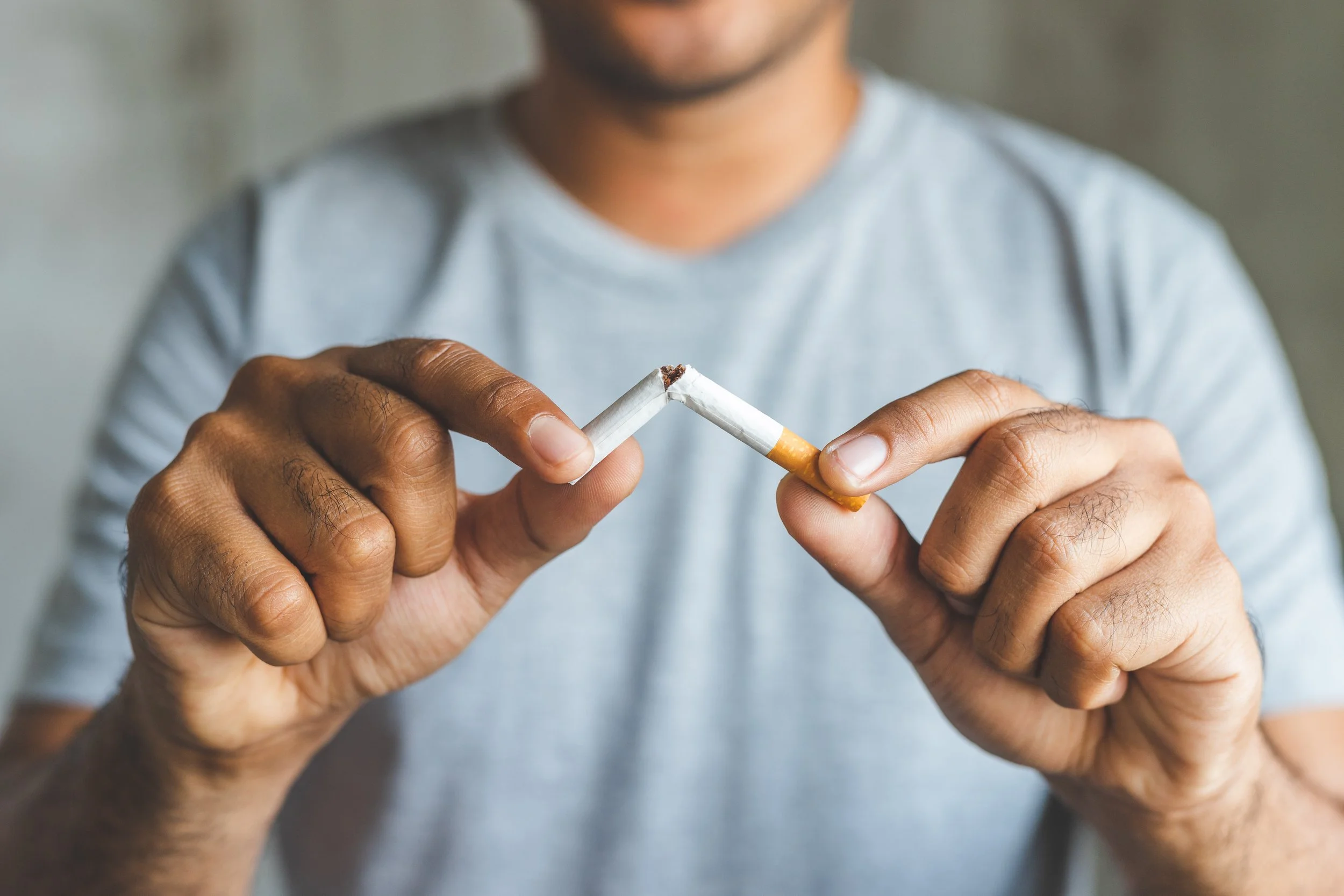
Pillar five of six in the lifestyle medicine series. This pillar is usually framed as avoiding risky substances broadly. I'm keeping it focused on the two most commonly used: tobacco and alcohol.
I'm not spending much time here on drugs like cocaine or heroin. Most people already know those are dangerous. I'll touch on cannabis and psychedelics in their own posts later, since both come up more and more as potential tools for pain management, and that's a more nuanced conversation than this pillar is built for.
Tobacco
The general toll is massive. Smoking is the leading cause of preventable death in the United States.
More than 480,000 deaths a year, close to 1 in 5 deaths overall.
Linked to at least 12 types of cancer, causes about 90% of lung cancer deaths and 80% of COPD deaths.
Raises risk for heart disease and stroke, and shortens life expectancy by about a decade on average.
There's no organ system it doesn't touch.
It's also one of the strongest known risk factors for RA. A meta-analysis found RA risk increased 26% with just 1 to 10 pack-years of smoking, and nearly doubled with more than 20 pack-years. The risk is even higher for antibody-positive RA, one study estimated smoking is responsible for around 35% of these cases. Smoking has also been linked to lupus, multiple sclerosis, Graves' disease, and other autoimmune conditions.
It affects treatment too. Active smokers tend to respond worse to antirheumatic therapy than nonsmokers, the same medication is often less effective if you're still smoking. Quitting doesn't erase the risk entirely, elevated RA risk can persist for years after cessation, but it's one of the most impactful things a smoker with RA can do for their disease.
What about vaping? There's a lot we still don't know, it hasn't been around long enough for the kind of long-term data we have on cigarettes. What we do know: e-cigarettes don't involve combustion, so they expose users to far fewer toxic byproducts than cigarette smoke, and current evidence suggests vaping is less harmful than smoking. But less harmful isn't the same as harmless, vaping is linked to respiratory symptoms and lung irritation, and smoking plus vaping together doesn't offer much benefit over smoking alone. Using vaping as a bridge to quit smoking entirely is supported by the evidence. Starting to vape when you've never smoked isn't a neutral decision.
Alcohol
Alcohol affects nearly every system in the body. It's a known cause of liver disease. It raises blood pressure. It disrupts sleep. And it's classified as a carcinogen, linked to at least seven types of cancer, including breast, colorectal, and liver cancer.
You've probably heard the standard guidance: up to 7 drinks a week for women, 14 for men. Those numbers come from an old government definition of "moderate" drinking, not a proven safety threshold. Newer research pushes back on this:
Even one drink a day is linked to higher risk of death from cirrhosis and certain cancers, and no amount of alcohol showed a clear overall health benefit once researchers weighed the risks together.
Breast cancer risk rises with even modest intake, about 9% higher at roughly one drink a day, up to 41% higher at 2 to 4 drinks a day. Alcohol raises circulating estrogen, which drives the most common type of breast cancer. Many women aren't aware of this.
The U.S. Surgeon General has called for cancer warning labels on alcohol, and other countries already recommend less than the U.S. does.
An occasional drink isn't dangerous. But "up to 14 a week" is an outdated number, not a safety guarantee.
Does alcohol affect your risk of developing these conditions? For RA, probably not. Some studies found moderate drinkers had lower risk, but more rigorous genetic research found that effect wasn't real. For PsA, the data is mixed: one large study found moderate drinking, not heavy, raised risk by 57%. Another found the opposite, no risk from moderate drinking, but a 4-fold higher risk from heavy drinking. Alcohol seems to matter for PsA risk, the studies just don't agree on how.
What about flares once you already have one of these conditions?
Psoriatic arthritis: commonly reported as a flare trigger, and heavier drinking is linked to worse psoriasis severity and treatment response.
RA: plausible, not proven. Heavy drinking can raise gut permeability and inflammation, but direct evidence for RA flares specifically is thin.
Lupus: thinner data, higher stakes, since the kidneys and liver are already at play. Most guidance leans toward avoiding it.
In my own clinic, I have had many patients report more joint pain or flare ups when drinking regularly. If you feel worse after drinking, trust that and bring it up with your rheumatologist.
The bigger issue for my patients is methotrexate. The old advice varied depending on the rheumatologist, but the typical recommendation ranged from complete avoidance to up to 5 drinks a week, due to liver toxicity risk. A newer study has since looked at this more directly and found no significant increase in liver problems up to about 8 standard drinks a week, though most rheumatologists, myself included, still recommend staying more conservative than that. I generally tell patients 5 or fewer. Talk to your rheumatologist directly about what's right for you.
If you’re trying to quit or cut back
Quitting on willpower alone is hard. There are real tools for both of these, and they work better than most people expect.
For smoking:
Varenicline (Chantix) is the most effective single medication for quitting, roughly triples your odds of success compared to going it alone.
Nicotine patches and gum are available over the counter and are a reasonable first step, especially combined with another medication. Patches give a steady baseline dose, gum helps with breakthrough cravings.
Bupropion (Zyban) also works well and can be combined with NRT or varenicline for an even better shot.
Combining medication with counseling or a quitline works better than either alone.
For cutting back on alcohol:
Naltrexone reduces cravings and makes it easier to stop after one or two drinks instead of continuing. It can be started while you're still drinking, which makes it a good fit for cutting back rather than only for full abstinence.
Support programs matter too. AA and similar peer support groups, along with individual counseling, improve outcomes on their own and work even better paired with medication.
If you're on opioid pain medication, tell your doctor before starting naltrexone, it blocks opioid receptors and can interfere with pain control. If you take naltrexone while on chronic opioids, it can also precipitate withdrawal symptoms.
Ask your primary care doctor or your rheumatologist for a referral if any of this is relevant to you. These medications are underused relative to how well they work.
A brief note on cocaine
Cocaine deserves one specific mention here because it can directly trigger an autoimmune illness. Levamisole, a contaminant found in a large share of the cocaine supply, has been linked to a specific type of ANCA-associated vasculitis, with skin, kidney, and lung involvement. Real autoantibodies, real tissue damage, but drug-induced rather than idiopathic. The key treatment step reflects that: stop using cocaine, and the condition often improves on its own.
Bottom line
If you're a smoker with RA or another autoimmune disease, quitting is one of the highest-impact things you can do, for your disease and your general health both. With alcohol, less is better. Don't treat the 7-and-14 numbers as a safety target. And if you're on methotrexate specifically, stick to 5 drinks a week or less.
Next up, pillar six: social connection.
Sources
Centers for Disease Control and Prevention. "Health Effects of Cigarette Smoking." General statistics on smoking-related mortality, cancer, COPD, and life expectancy.
Di Giuseppe D, Discacciati A, Orsini N, Wolk A. "Cigarette smoking and risk of rheumatoid arthritis: a dose-response meta-analysis." Arthritis Research & Therapy, 2014. Found a 26% increased RA risk at 1-10 pack-years and near doubling at over 20 pack-years.
Källberg H, et al. "Smoking is a major preventable risk factor for rheumatoid arthritis: estimations of risks after various exposures to cigarette smoke." Annals of the Rheumatic Diseases, 2011. Swedish EIRA case-control study finding smoking responsible for 35% of ACPA-positive RA cases (55% in those with two copies of the shared epitope gene).
"The health effects of vaping and e-cigarettes: consensus recommendations." ScienceDirect, 2025. Expert panel review situating vaping on a continuum of harm, less risky than combustible tobacco but not risk-free.
Evidence update on the respiratory health effects of vaping e-cigarettes: A systematic review and meta-analysis, 2025. Found increased respiratory symptoms in vapers compared to never-users.
Medical News Today, summarizing the Alcohol Intake and Health Study prepared for the 2025-2030 U.S. Dietary Guidelines. Found no alcohol consumption level associated with an overall health benefit, and increased mortality risk starting around one drink per day.
U.S. Surgeon General's Advisory on Alcohol and Cancer Risk, January 2025. Called for updated cancer warning labels on alcohol products.
"Estrogen, alcohol and breast cancer risk." Journal of Steroid Biochemistry and Molecular Biology. Pooled cohort analysis finding a dose-response relationship between alcohol intake and breast cancer risk.
Hamajima N, et al. (Collaborative Group on Hormonal Factors in Breast Cancer). "Alcohol, tobacco and breast cancer, collaborative reanalysis of individual data from 53 epidemiological studies, including 58,515 women with breast cancer." British Journal of Cancer, 2002. The largest pooled analysis on this question, finding relative risk 1.32-1.46 across comparable dose ranges, corroborating the figures above.
Bergman J, et al. "Alcohol Consumption and Risk of Common Autoimmune Inflammatory Diseases: Evidence From a Large-Scale Genetic Analysis Totaling 1 Million Individuals." Mendelian randomization study finding no convincing causal protective effect of alcohol on RA, MS, IBD, or lupus.
Green A, et al. "Modifiable risk factors and the development of psoriatic arthritis in people with psoriasis." British Journal of Dermatology, 2020. UK cohort study finding moderate (not heavy) drinking associated with 57% higher PsA risk.
Wu S, et al. Nurses' Health Study II, published in the Journal of Rheumatology. Found no added PsA risk from light-to-moderate drinking, but a 4-fold higher risk with heavy drinking (>30g/day), the opposite dose-response pattern from the Green et al. study.
Iskandar IYK, et al. "Alcohol misuse is associated with poor response to systemic therapies for psoriasis." British Journal of Dermatology, 2021. Multicenter cohort study linking alcohol misuse to worse treatment response in psoriasis.
"Does Alcohol Cause Arthritis Flare Ups?" Biology Insights. Summary of the gut-permeability mechanism by which heavy alcohol use may worsen inflammation in RA and PsA.
WebMD, "Lupus and Alcohol: What You Should Know." Patient-facing guidance recommending minimizing or avoiding alcohol in lupus due to kidney and liver strain.
Humphreys JH, et al. "Quantifying the hepatotoxic risk of alcohol consumption in patients with rheumatoid arthritis taking methotrexate." Annals of the Rheumatic Diseases, 2017. UK cohort study finding no significant increase in liver test abnormalities up to 14 UK alcohol units per week (roughly 8 US standard drinks), with risk rising clearly above 21 units. One observational study; most rheumatologists still recommend more conservative limits.
Vaezi Z, Amini A. "Cocaine- and Levamisole-Induced Vasculitis (CLIV)." Cureus, 2025. Systematic review of the ANCA-associated vasculitis syndrome linked to levamisole-contaminated cocaine.
Cleveland Clinic Journal of Medicine, "The current state of tobacco cessation treatment." Review confirming varenicline as first-line, most effective smoking cessation medication, superior to bupropion and NRT alone.
Office of Addiction Services and Supports (New York State), "Medications for the Treatment of Alcohol Use Disorder." Overview of naltrexone's mechanism and use for reducing heavy drinking.
Maisel NC, et al. "Meta-analysis of naltrexone and acamprosate for treating alcohol use disorders: when are these medications most helpful?" Addiction, 2013. Found naltrexone effective for reducing heavy drinking and cravings.