What You Eat and Autoimmune Disease
Pillar three of six in the lifestyle medicine series. Food affects inflammation, chronic disease risk, and how your body functions day to day. Here's how it works, what the research shows for rheumatoid arthritis specifically, and how to change what you eat without flipping a switch overnight.
How food affects your body
Food is more than fuel. It's information your body is constantly responding to. What you eat influences inflammation, blood sugar, cholesterol, blood pressure, and gut health, all of which feed into your long-term risk for disease.
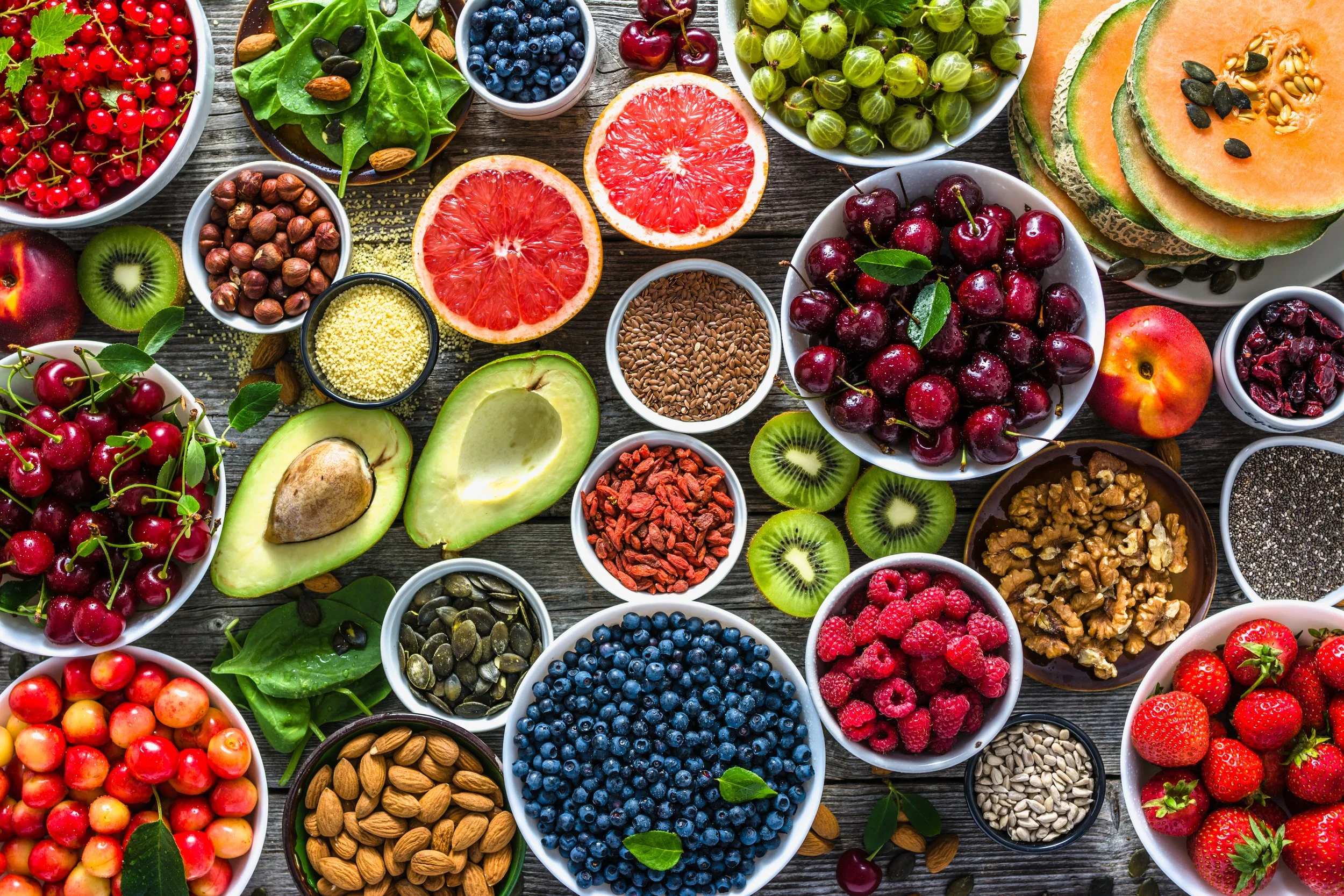
The pattern works broadly. A whole-food, plant-predominant eating pattern, built around vegetables, fruits, whole grains, legumes, nuts, and seeds, is one of the more extensively studied approaches in nutrition science.
Linked to lower all-cause mortality in large cohort studies
Manages, and in some cases reverses, type 2 diabetes
Improves cholesterol and blood pressure, lowering cardiovascular risk
Linked to lower rates of obesity and several cancers
Associated with slower cognitive decline and lower dementia risk in several large studies
Linked to improved mood and lower rates of anxiety and depression, a newer but growing area of research
Associated with healthier skin, largely through its effect on the gut microbiome, with research showing benefit for conditions like acne and psoriasis
Linked to a lower risk of hospitalization for infections, including respiratory infections, in a large US cohort study
Better for the planet, too. Animal agriculture uses about 80% of the world's farmland while providing only 17% of global calories, and food production accounts for roughly a quarter of global greenhouse gas emissions. Eating more plants is a personal health decision that also happens to be a planetary health decision.
Protein choice matters. Not all protein sources affect inflammation the same way. They fall on a rough spectrum, from most to least inflammatory:
Processed meat (worst end): bacon, hot dogs, deli meat. A daily 50-gram serving, about two slices of bacon or one hot dog, is associated with an 18% higher risk of colorectal cancer.
Red meat: beef, pork, lamb.
Poultry: chicken, turkey. Leaner than red meat, milder inflammatory profile.
White fish and eggs: largely neutral, with little to no effect on inflammatory markers.
Fatty fish: salmon, sardines. The omega-3 content gives these real anti-inflammatory effects.
Plant-based proteins (best end): beans, lentils, chickpeas, nuts, seeds, tofu.
I'll go deeper on plant-based protein specifically, including some myths about soy and tofu, in a future post.
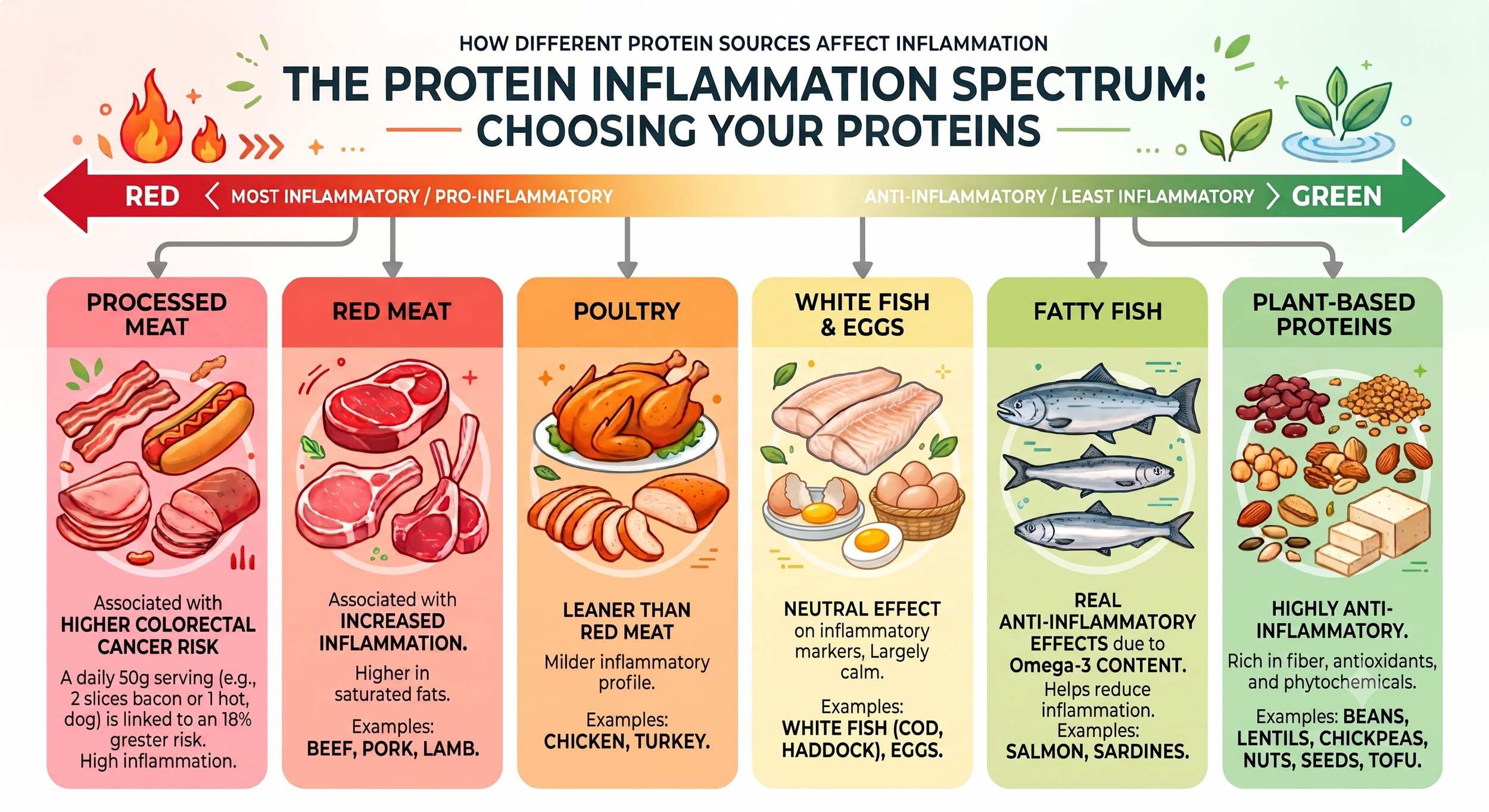
Spectrum of protein rich foods on anti-inflammatory scale.
Fiber matters too. Your body doesn't break fiber down directly, your gut bacteria do. When they ferment it, they produce short-chain fatty acids like butyrate, which help regulate inflammation throughout the body. This is one of the more well-established mechanisms behind why plant-heavy diets tend to lower inflammation.
My own experience
I had high cholesterol for as long as I can remember, despite eating what I considered a healthy diet, exercising regularly, and maintaining a healthy weight. None of that moved my LDL. It wasn't until I switched to a plant-predominant diet that my LDL dropped, from 150 to 115 in three months, roughly a 23% drop. I was strict during those three months. These days I'm more flexible (meals out, vacations, ice cream with my kids), but the underlying pattern still holds most of the time. I can tell within hours of eating a burger and fries that it was the wrong choice. Don't get me wrong, it tastes great, but I feel it later that day.
The most common objection I hear is that eating this way is less enjoyable. I understand where that comes from. But your taste buds change over weeks as you adjust — foods that used to taste bland start tasting different once you're not used to as much salt, sugar, and fat. Most people feel significantly better eating this way, and you may not fully realize what your current diet is doing to you until you change it and notice the difference. Think about how you feel an hour after a burger and fries — energized or sluggish? Now think about how you feel an hour after a salad.
What the research shows for rheumatoid arthritis
The diet pattern with the most research behind it in RA specifically is the Mediterranean diet, also called an anti-inflammatory diet. These are essentially the same thing. Both overlap heavily with the plant-predominant pattern above, vegetables, fruits, whole grains, legumes, but with more flexibility: fish, olive oil, and moderate amounts of lean meat and low-fat dairy.
Two clinical trials found that patients following a Mediterranean diet had measurable improvements in disease activity after several weeks, on top of the general cardiovascular and metabolic benefits described above.
I've seen this play out with my own patients too and it’s one of the main reasons I set out to learn more about nutrition for management of disease. A handful have been able to get by on little to no medication after making major dietary changes. That's the exception, not the rule, most people with RA still need some medication to keep the disease controlled. Diet isn't a replacement for DMARDs or biologics, but it's one of the most useful tools we have alongside them.
Making the change
You don't have to flip a switch overnight. Trying to overhaul your entire diet in one week is a good way to quit by week two. Small, sustainable swaps add up faster than a total reset that doesn't stick.
A few places to start:
Swap or skip the meat in dishes where it's not the main event. If you're making spaghetti sauce, try leaving the ground beef out entirely, or swap in a plant-based protein like red lentils.
Switch to whole grains. Brown rice instead of white, whole grain pasta instead of regular. Same meal, more fiber.
Switch your milk. Use a plant-based milk in cereal or a smoothie instead of dairy. Mixed in with other ingredients, most people can't tell the difference.
Cook more, eat out less. Restaurant meals are harder to control for ingredients, portion size, and added oil or salt. Cooking at home gives you more say over what goes into your food.
When you do eat out, pick the better option on the menu. A salad instead of a burger, grilled instead of fried, extra vegetables instead of fries. You don't need a perfect meal, just a better one than the default.
None of this requires giving up food you love or committing to a strict label like vegan or vegetarian. Small changes, kept up consistently, add up more than a perfect diet you can't sustain.
Bottom line
Food is medicine. Not a replacement for the medication controlling your disease, but a real, powerful tool that works alongside it. At this time, a Mediterranean-style, whole-food eating pattern is the most evidence-backed nutritional approach available for RA and other autoimmune conditions, and it's doing more for your heart, your metabolism, and how you feel day to day than most people realize. Start small, and build from there. If you want to go deeper on any of this, I've got more resources on the Resources tab of the website.
Next up, pillar four: stress management.
Sources
American College of Lifestyle Medicine. "Evidence-based Nutrition." Official definition of the whole-food, plant-predominant nutrition pillar.
American College of Lifestyle Medicine. "The Benefits of Plant-Based Nutrition: Longevity and Quality of Life." Summary of evidence linking plant-based eating to lower all-cause mortality, coronary heart disease, and cerebrovascular disease.
"The effects of plant-based diets on the body and the brain: a systematic review." Translational Psychiatry, 2019. Notes that mortality findings are strong in some large cohorts (Adventist studies) but not replicated in others (EPIC-Oxford, 45 and Up Study).
"Plant-Based Diets and Cognitive Outcomes: A Systematic Review and Meta-analysis." Found healthful plant-based dietary patterns associated with lower odds of cognitive impairment and dementia risk, though findings were inconsistent across individual studies.
"Exploring Plant-Based Diets and Mental Health Outcomes: A Systematic Review." Summarizes emerging evidence linking plant-based eating to improved mood, anxiety, and depression outcomes.
"Diet and Dermatology: The Role of a Whole-food, Plant-based Diet in Preventing and Reversing Skin Aging." The Journal of Clinical and Aesthetic Dermatology, 2020. Review of plant-based diets and skin health, largely mediated through the gut microbiome.
"Plant-Based Diets and Risk of Hospitalization with Respiratory Infection." Nutrients, 2023. An Atherosclerosis Risk in Communities (ARIC) cohort study finding a healthy plant-based diet associated with lower risk of hospitalization for respiratory and other infections.
EAT-Lancet Commission on Food, Planet, Health. The Lancet, 2019. Report on the health and environmental case for a more plant-forward global diet, including land use and greenhouse gas emissions data from animal agriculture.
World Cancer Research Fund/American Institute for Cancer Research Continuous Update Project, published in Annals of Oncology, 2017. Found processed meat intake associated with an 18% increased risk of colorectal cancer per 50 grams per day.
"From Dietary Fiber to Host Physiology: Short-Chain Fatty Acids as Key Bacterial Metabolites." Cell, 2016. A review of how gut bacteria ferment fiber into anti-inflammatory short-chain fatty acids like butyrate.
Skoldstam L, Hagfors L, Johansson G. "An experimental study of a Mediterranean diet intervention for patients with rheumatoid arthritis." Annals of the Rheumatic Diseases, 2003. A clinical trial finding improved RA disease activity after 12 weeks on a Mediterranean diet.
McKellar G, et al. "A pilot study of a Mediterranean-type diet intervention in female patients with rheumatoid arthritis living in areas of social deprivation in Glasgow." Annals of the Rheumatic Diseases, 2007. A pilot trial with similar findings in a different patient population.